





This story is part of the June issue of Forbes Central America magazine.
“When the Bukele-shaped piggy banks arrive, they leave quickly,” explains Evelyn Colocho, who runs a souvenir street stall in Juayúa, a small town that is part of the tourist route ‘La Ruta de las Flores’, in western El Salvador. Part of his family lives in this business in which, in addition to local handicrafts, they sell all kinds of merchandising with the image of the Salvadoran president; from caps and key chains to aprons and wall clocks. Of course, there are also the coveted piggy banks that are a big seller. These items are bought by both locals and many foreigners who pass through this popular enclave in the municipality of Sonsonate. “It’s because of the Bukele effect,” says the merchant with a friendly smile.
The so-called ‘Bukele effect’ has reached all corners of his country, after five years of government of New Ideas, the political party created by himself. It also resonates widely in Latin America, where they share many of the ills that afflicted the smallest of the Central American countries, such as violence and impunity. And, beyond that, Nayib Bukele’s personal leadership style and rhetorical skills have caught the attention of the whole world, for his speeches that leave no one indifferent and put El Salvador under the international spotlight.
The standard-bearer of his popularity is the security that the country currently enjoys. In little more than two years, it went from being the most violent country in the world to the safest in the Western hemisphere, as he himself affirms. Thanks to his “iron fist” policy against gangs, which terrorized the population for decades through murder, kidnapping, and extortion, Salvadorans came out en masse to vote for the now reinvestigated president, despite the questions of unconstitutionality that, at some point, raised his permanence in office for another five years.
In the face of the political opposition which, although a minority, continues to be vociferous and critical, the president calls for national unity; a formality, considering that, in the elections held on February 4 of this year, he obtained more than 84% of the votes and his party occupies 54 of the 60 seats in the Legislative Assembly.
In his inauguration speech, on June 1, Nayib Bukele assured that the country is going through the most important moment in its recent history, having survived the “terminal cancer” of the yoke of extreme violence. However, continuing with the health analogy, he acknowledged that El Salvador suffers from other ailments, especially related to the economy, hinting at his government’s new priority.
According to World Bank data, updated in April, the Salvadoran economy grew by a modest 2.7% in 2023, a rate that is expected to be maintained this year. This organization stresses the need to promote reforms that guarantee fiscal sustainability and points to public indebtedness, which reached 90% of GDP after the pandemic, liquidity pressures, the lack of financing alternatives, and its weak capacity to issue debt, as the main challenges.
On the other hand, the World Bank also recognizes El Salvador’s potential to boost economic growth through public investment and the promotion of a more dynamic, competitive, and innovative private sector.
FIXATION ON TECHNOLOGY
“El Salvador is emerging as an emerging technology hub,” said the Salvadoran Minister of Economy, María Luisa Hayem, during an interview with Forbes in December 2023. The government of Nayib Bukele, a president whose usual personal image is not out of place in Silicon Valley, has focused from the beginning on identifying and creating the conditions that will allow the arrival of new technology companies to the country, from startups to multinationals. It has even entered into strategic partnerships with technology giants such as Meta, Microsoft, and Amazon to ensure that the lack of talent is not an obstacle to the growth of this industry.
Now, the lines of action are focused on eliminating bureaucratic hurdles and simplifying administrative processes. According to the World Bank’s Doing Business 2024 ranking, El Salvador ranks 91st among the 190 countries evaluated by this organization for its ease of doing business and, therefore, attracting investment. As strengths, the analysis highlights the conditions for obtaining credit and for cross-border transportation. As for weaknesses, they focus on the bureaucracy involved in opening new businesses, as well as construction permits.
However, the wave of investment that has brought the nearshoring phenomenon to these shores has not bypassed El Salvador. Thanks to the innovation ecosystem that is being generated, more than 55 companies have arrived in the country in the last year, including several from the technology sector, says Minister Hayem.
This ecosystem is reinforced with the arrival of Google in April, following an agreement that involves the disbursement of 500 million dollars (add) by the Salvadoran government to pay for its services. A law approved in September 2023 by the Legislative Assembly, this will allow the modernization of the country in areas such as digital government, health, and education, explained President Bukele himself during the inauguration of the offices of the Californian giant, in one of the most exclusive areas of the Salvadoran capital.
The country also has the support of the World Bank, through the so-called ‘Project to promote job opportunities and skills development in El Salvador’, which consists of an investment of $150 million dollars in order to promote Salvadoran talent. In total, this institution has seven projects in operation in the country, which together total $1,270 million dollars.
The positioning of El Salvador as an economy at the forefront of financial technology and other technological areas is a clear message to the world. This new status is essential to change the global perception of the country as a much more attractive place for investment.
MONEY WAVES
A good quality ocean wave can generate an increase in economic activity in a coastal destination of between 16% and 32% over two decades. This is the conclusion reached by two economists, Thomas McGregor and Samuel Wills, in a study published by the University of Oxford in 2016, entitled Surfing a Wave of Economic Growth, on the impact of this sport in terms of attracting capital.
The Bukele administration has implemented effective marketing and development strategies in recent years, highlighting the country’s unique competitive advantages for surfing. In this time, the promotion of the destination as a “Surf City” has captured worldwide attention, attracting internationally renowned events and iconic figures of the sport such as Kelly Slater, the ‘Leonel Messi’ of the waves.
The celebration of other international events such as Miss Universe, at the end of last year, has also put the name of this proud country on the list of places that are likely to attract the spotlight of the small screen and its sponsors, arousing the interest of companies, tourists and the curious.
But, above all, the recent transformation El Salvador has undergone in terms of security has been fundamental in achieving the 3.4 million visitors it had in 2023, which left foreign exchange earnings of more than 3.6 billion dollars.
With a 40% growth compared to 2019, UN Tourism places the country in the top 5 of the largest post-pandemic tourism recoveries in the world, led by Qatar.
The joint effort between the technology and tourism sectors is paying off and positioning this nation bathed by the waters of the Pacific, as a fresh and innovative destination. It is also a rare gem for investors and entrepreneurs.
Aaron Miguel Varquero runs Oceanside El Salvador Real Estate, founded 12 years ago in El Tunco, a popular beach about a 45-minute drive from San Salvador. He specialized in coastal projects, becoming one of the pioneers of tourism investment in the area. Since then, the businessman claims to have witnessed a major transformation, driven by the action of specialized companies, such as his own, and the significant change in public investment policies and projects.
“Between 2021 and 2024, properties have increased in value by 45%. In first-world countries with dynamic real estate markets, the growth rate is usually between 7% and 9% per year. Here it is 15% or higher, which is crazy. We are definitely in a seller’s market, where demand is greater than supply,” he says.
However, he also points out that there are still significant challenges, especially in terms of infrastructure for water supply, energy, and sanitation.
“Concern about the lack of basic resources makes evident the need for policies that incentivize sustainable developments and innovative technologies,” he says.
Morena Valdez, Minister of Tourism, explains to Forbes days before the presidential inauguration, that they have grown faster than they expected. “Being in the top 5 countries in the world shows that we grew considerably between 2021 and 2023, in just two years. This growth brings with it great challenges, which we face by working from several areas.”
One of these is a program with the Inter-American Development Bank, through a $106 million loan, 70% of which is to be invested in wastewater treatment and environmental sustainability for Surf City 2.
At the same time, several government portfolios are working to raise public awareness, including training to prevent dumping and promote recycling, in collaboration with private enterprises.
The government’s most ambitious plan is to increase the share of renewable energy to 99% by 2030.
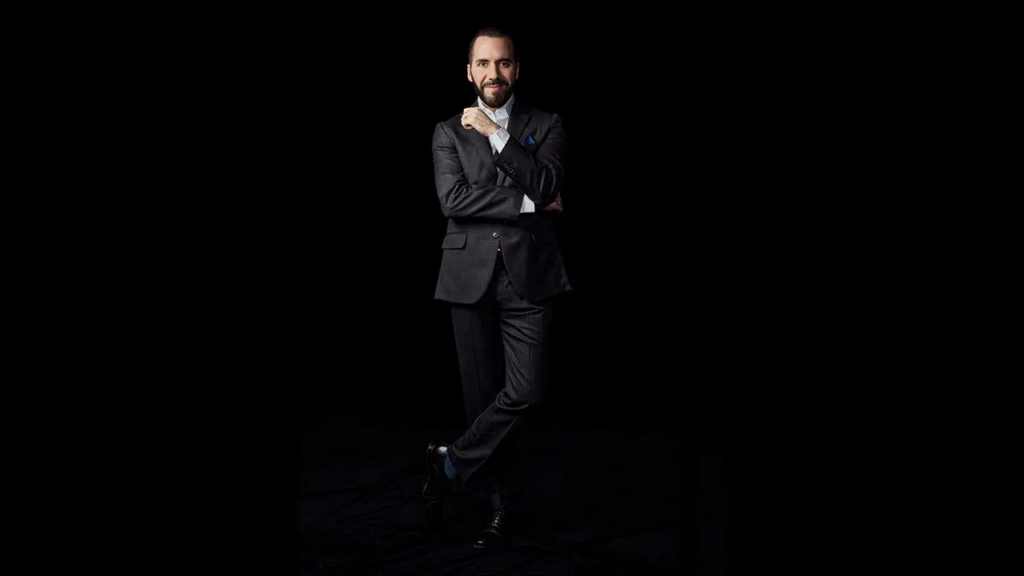
NAYIB BUKELE, EL SALVADOR’S PRESIDENT SPEAKS TO THE WORLD
Geothermal, solar, and wind energy projects are underway, and innovations such as electricity generation from ocean waves are being explored. In addition, the country is considering nuclear energy as a medium-term option, a decision that demonstrates its ambition to diversify and strengthen its energy matrix, explains Daniel Álvarez, El Salvador’s Director General of Energy, Hydrocarbons and Mines.
A BITCOIN IN THE AIR
El Zonte is a small coastal community in La Libertad. It is where Román Martínez grew up and shared a dream with his childhood friends; to one day change the narrative that good opportunities only come from abroad. That thought would give birth years later to Bitcoin Beach, the world’s first Bitcoin-based circular economy ecosystem. Although this project he co-founded with Mike Peterson and Peter DeSoto in 2019, its roots go back more than a decade of community work, offering financial and technology education.
Today, this popular corner among surfers is a real, albeit small-scale, test of a Bitcoin-based economy, where people buy, cash, and save in this digital currency. “Bitcoin has not only become a means of payment, but a tool for economic and social empowerment. The adoption of Bitcoin has allowed many families, who were previously excluded from the banking system, to access digital transactions and investment opportunities in a digital asset for the first time,” says the entrepreneur.
He also tells Forbes that the possibility of buying properties with Bitcoin has revolutionized the local real estate market, generating a notable increase in demand and establishing El Salvador as a preferred destination for Bitcoiners.
The adoption of Bitcoin as legal tender has placed El Salvador at the epicenter of a transgressive revolution starring this cryptocurrency, which has caught the attention of many leaders in the global financial sector.
This vision of President Bukele is executed by a team led by Stacy Herbert, who heads the government’s National Bitcoin Office, which is dedicated to developing and maintaining the structure of the first Bitcoin country. This includes everything from formulating educational policies to attracting international investors and opening Bitcoin embassies in strategic locations, such as Lugano in Switzerland.
This office has also been in charge of helping to create the regulatory framework to be able to execute the issuance of the Volcano Bonds, announced by President Bukele in November 2021, during the first ‘Bitcoin Week’, in El Salvador.
The regulation was approved last December and the debt instrument is ready to see the light. “Now the president has the launch in his hands and I think there will be some news about it soon,” Herbert tells Forbes.
Theoretically, the issuance of the Volcano Bonds will serve to finance the Bitcoin City project in the east of the country, whose investors and residents will be tax-exempt.
This mega project will be located in the vicinity of the new Pacific International Airport, with residential, commercial, and entertainment areas. It will also have a port and a train.
The new city, designed by Mexican architect Fernando Romero, will also have a holistic approach to urban planning that will use renewable energy powered by the Conchagua volcano.
Everything that is happening in El Salvador around Bitcoin has sparked the interest of some prominent names eager to be part of the game, such as Cathie Wood, founder of ARK Invest, a firm with $60 billion in assets, which invests in innovations such as autonomous cars and genomics; companies like Fold, which developed the first Bitcoin debit card that gives rewards for shopping; and Strike, which allows bank deposits in dollars to be sent for Bitcoin; and more than 15 other exchanges, wallets and similar companies that have registered with the country’s National Commission for Digital Assets (CNAD).
Expectations are high. Cathie Wood, who was able to meet personally with the Salvadoran president days before his second inauguration, posted the following message on the social network X shortly after: “President Bukele’s determination to turn El Salvador into an oasis for the Bitcoin and Artificial Intelligence communities – two of the biggest economic and technological revolutions in history – is the reason why I believe its real GDP could increase 10-fold in the next five years”.
THE ECONOMY OF PEACE
Teresa Miranda lives in La Campana, a neighborhood in the Salvadoran capital that until recently was under the control of the Barrio 18 gang, which is linked to the Mara Salvatrucha in several areas of the country. He is no longer afraid. She can leave her house to visit relatives and friends in other neighborhoods, such as Las Margaritas, without fear of being attacked or risking her life. She is happy because soon they will have a celebration: the laying of the first stone of the Casa Comunal, something they have been waiting for a long time.
Night is falling and, among the army units that watch over the security of the area, carrying heavy weapons, we hear the commotion of a group of children playing on the swings. Their mothers, sitting on public benches, watch them. Down the street, a group of young people practice soccer on the artificial grass fields, where they have already turned on the huge floodlights that illuminate the space. Before, none of this was possible.
In a small grocery store, three women complain about the high price of food. Two of them used to work in the maquila – a very hard job – until they decided to set up their ‘little shop’, protected by a fence that gives the impression of a cage. “We want to go to the United States, where the economy is very difficult,” says one of them.
Gustavo Villatoro, El Salvador’s Minister of Justice and Public Security, explains to Forbes that “it is evident that we are going to need a lot more investment to better develop our human talent that, for more than 40 years, we have been exporting”.
Now that there are incentives and security for the return of Salvadorans, he assures that results are already being seen in a country of 6.3 million inhabitants with 3 million more in the diaspora.
“Isn’t it the dream of every migrant to return to their homeland? Now it is possible, but we need the dynamism of the private sector to keep moving forward,” he says.
For Nayib Bukele, Singapore is an example of economic and social development that El Salvador should follow.
The road will be long and the decisions will be complex, even unpopular. Although he has the political legitimacy granted by the 2.4 million votes he obtained in the last presidential elections and leads in popularity in all polls in Latin America, the success of governments is measured by their results, not by social networks.
So, while people continue to buy those piggy banks sold by Evelyn Colocho in the peaceful town of Juayúa, the reelected president of the country has an important mission to fulfill; that Salvadorans have something to fill them with.
Source: Forbes Centroamérica
Share
« From Bukele to the worldEl Salvador offers great potential to investors: William Duncan, U.S. Ambassador. »