





The work of President Nayib Bukele’s government to modernize customs processes continues. Recently, the General Director of Customs of El Salvador, Benjamín Mayorga, together with the National Director of Customs of Uruguay, Jaime Borgiani, signed the Memorandum of Understanding on institutional cooperation and mutual assistance in customs matters.
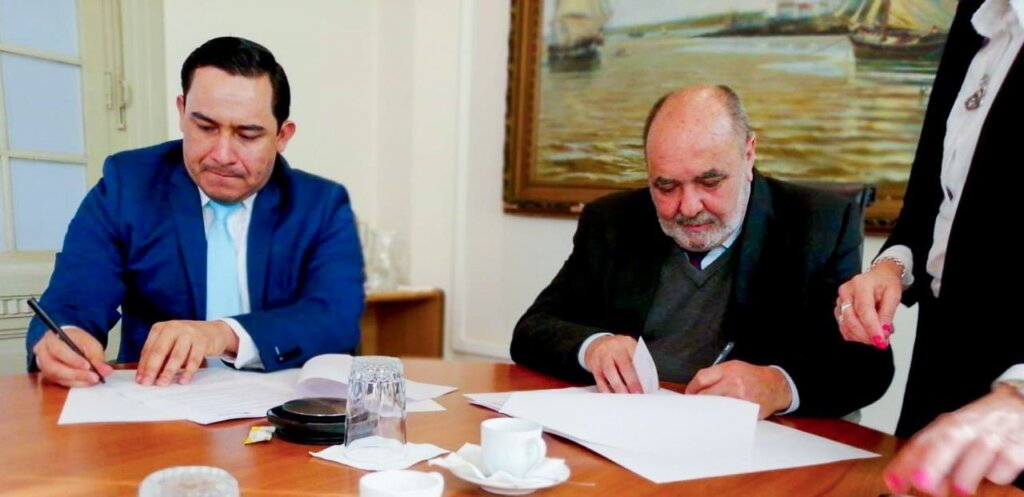
According to the Salvadoran official, the customs agreement between Uruguay and El Salvador will have benefits such as the exchange of best practices, training programs and collaboration between these customs offices.
“With the signing of this agreement, we are ratifying the commitment with the Customs of Uruguay, becoming an advance for the facilitation of trade between both nations and will allow us to work in an articulated manner between customs institutions,” Mayorga explained.
He also explained that the main objective of the agreement is mutual institutional cooperation for capacity building and the provision of technical assistance in customs matters.
Borgiani stressed the importance of the agreement and highlighted the region’s strengths in mutual cooperation.
“The purpose of the objective is also to optimize the functions of control and facilitation of international trade, seeking the establishment of efficient processes, applying information technologies and the best international customs management practices,” he said.
What does the agreement entail?
The agreement establishes technical assistance and advice in areas of common interest, through the exchange of best practices implemented by both customs offices.
Likewise, an exchange of information and experiences was specified regarding the computerized development of customs work for the prevention, investigation, control and combat of customs infractions by air, sea and land, related to persons, merchandise and means of transportation, considering the legal limitations of each party.
In addition, the training and qualification of specialists according to the possibilities of each of the countries, as well as creating the necessary conditions for the mutual recognition of the status of Authorized Economic Operator and other customs matters of mutual interest.
It was also agreed to promote the digitalization and modernization of customs, encouraging the application of technological solutions to reduce digital gaps through Disruptive Technologies, in order to ensure and facilitate foreign trade processes between both countries.
Source: Diario El Salvador.
Share
« “We will promote the port of Acajutla to bring great logistic benefits to El Salvador”: Federico Anliker, president of CEPA.Invest in El Salvador will take 50 Salvadoran businessmen to China fair »