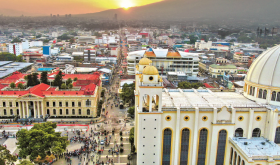






The regional bank indicated that the projects will benefit more than 117,000 people and the commerce sector.
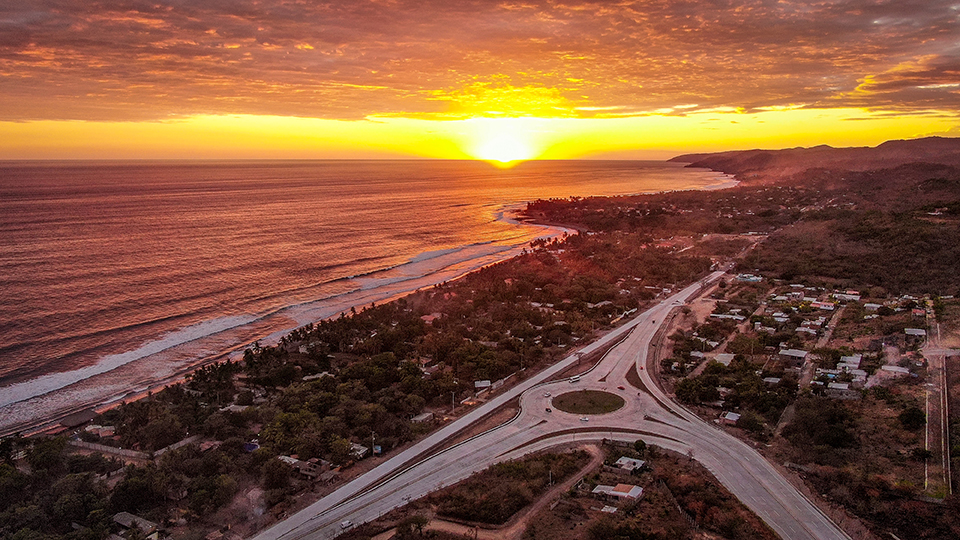
The Central American Bank for Economic Integration (CABEI) approved a loan of $113.9 million to expand a section of the Litoral highway, in the area of La Libertad and Tamanique, and improvement works in the area known as kilo 5.
The program is called Surf City – Phase 1, and according to CABEI, the authorities will widen to four lanes a second section of highway CA02 (Litoral) and will improve 8.67 kilometers of road infrastructure, pedestrian and cyclist network, in the districts of La Libertad and Tamanique, detailed the entity in a press release.
“The Pacific Corridor Interchange will be implemented in the district of Acajutla and municipality of Sonsonate Oeste, an engineering work that will improve the existing road at the intersection located between the Litoral CA02W and Acajutla CA12S road (Kilo 5), including improved drainage systems and natural barriers that protect against flooding and extreme weather events,” CABEI said.
The agency assures that these road projects will reduce traffic congestion and transport times for more than 2,621 vehicles that travel these roads daily, “thereby improving the experience of domestic and foreign tourists who visit this important Salvadoran tourist destination”.
“This initiative will also strengthen regional integration by favoring access to the Acajutla seaport and the borders of El Salvador and Guatemala, such as La Hachadura and San Cristóbal,” CABEI added.
The program also includes the installation of a wastewater treatment plant in El Palmarcito, El Sunzal, district of Tamanique, municipality of La Libertad Costa, integrating more energy-efficient water treatment technologies with a lower carbon footprint, allowing the reuse and recycling of water to reduce the demand for water resources, which will benefit 10,000 people.
Source: El Economista
Share
« El Salvador seeks to encourage construction of high-rise buildings with tax exemptionTeknowledge announces its arrival in El Salvador with US$20 million investment »