





The estimated investment in these photovoltaic parks amounts to $152.6 million, according to data from the Ministry of Housing.
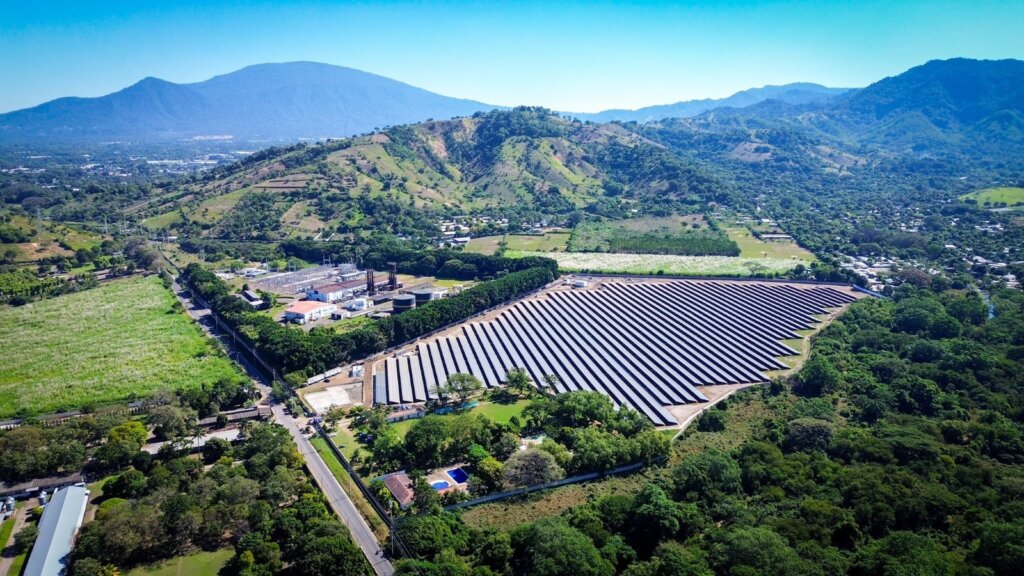
Between 2015 and 2023, El Salvador experienced a 160-fold increase in its solar energy generation capacity, according to statistics from the Latin American Energy Organization (Olade).
This increase is the result of a greater number of solar farms in the territory, which contribute to the energy matrix from their operations. It is estimated that the country has more than 60 solar plants throughout the territory, and only during the administration of President Nayib Bukele, institutions such as the Ministry of Housing have granted construction permits for 21 solar plants, which represent an investment of $152.6 million.
Among the photovoltaic parks that are operating or under construction are the San Isidro Photovoltaic Solar Park, in Cabañas Este; the La Independencia 2 Photovoltaic Solar Plant, located in La Libertad Oeste; and the La Esperanza Solar Plant, in Cuscatlán Norte.
Also noteworthy is Talnique Solar, the first solar plant in the State, which is operated by Inversiones Energéticas (INE) and was inaugurated in December of last year with an installed capacity of 17 megawatts (MW) peak.
With these additions, national photovoltaic plants currently produce 539.07 gigawatt hours (GWh), which represents 7.31 % of the national matrix, while in 2017 only 94.8 GWh were produced, according to data from the General Directorate of Energy, Hydrocarbons and Mines (DGEHM).
In this regard, Oscar Funes, vice president of the Salvadoran Association of Renewable Energies (ASER), considered that due to the placement of these new infrastructures, the nation is in a better position compared to other countries.
“We have seen that in the last five years there has been an unparalleled growth in solar energy, compared to other countries in the region. While it is true that not all projects with permits granted are built, it is undeniable to see the great impact of those that are already operating,” he said.
According to the expert, the interest in the construction of solar plants in the country is due to several reasons. Perhaps the most important is that El Salvador has adequate levels of radiation, which facilitates production, but also the fact that there has been a reduction year by year in technology costs.
“El Salvador, compared to any country in the region, is the country where there is better radiation. On the other hand, in the world market there has been a year-to-year reduction in technology prices. If we consider the last five years, the technology has had a reduction of approximately 33% of the installation cost, one third of the cost has been reduced”, he said.
On the other hand, he indicated that important steps have been taken by the government to improve the permitting process, which has reduced by 25% the time required in past periods to start projects.
“Before you had to deal with up to 12 different institutions to get permits to do a solar farm, then from the time you started designing to the time you started construction it could take two to three years. Now it has changed. While it is true that it is not completely expeditious, since the creation of the Directorate of Construction Procedures, we have a sort of one-stop shop where all the procedures are concentrated in this directorate and are coordinated in a more effective way,” he commented.
He also mentioned that development banks have shown greater interest in financing green energy projects at low interest rates.
ASER records indicate that new investments in this area are being analyzed, most of them combining elements such as solar generation with batteries. The idea is to be able to supply both day and night with the power offered by the sun.
One of the companies that has big bets in that sense is AES El Salvador, which opened its first solar farm in 2015 in the municipality of Moncagua, which has a capacity of 2.5 megawatts, and continued to develop similar technology in the following years. This multinational has built a total of 34 solar plants, both ground and rooftop, for commercial and industrial clients.
Source: Diario El Salvador
Share
« El Salvador will open the doors to the “SNBX Innovation Summit 2025”.Conamype, Chancellery and Invest sign agreement to promote exporting MSMEs. »